
Choosing the right colors for your home can feel overwhelming. Grey and green are a perfect match because they balance cool neutrals with natural, calming tones. In this guide, you will find 15 grey and green living room ideas that work for any style. We will show you how to mix these shades to create a space that feels fresh and comfortable for your family.
1. Deep Emerald Velvet Sofa
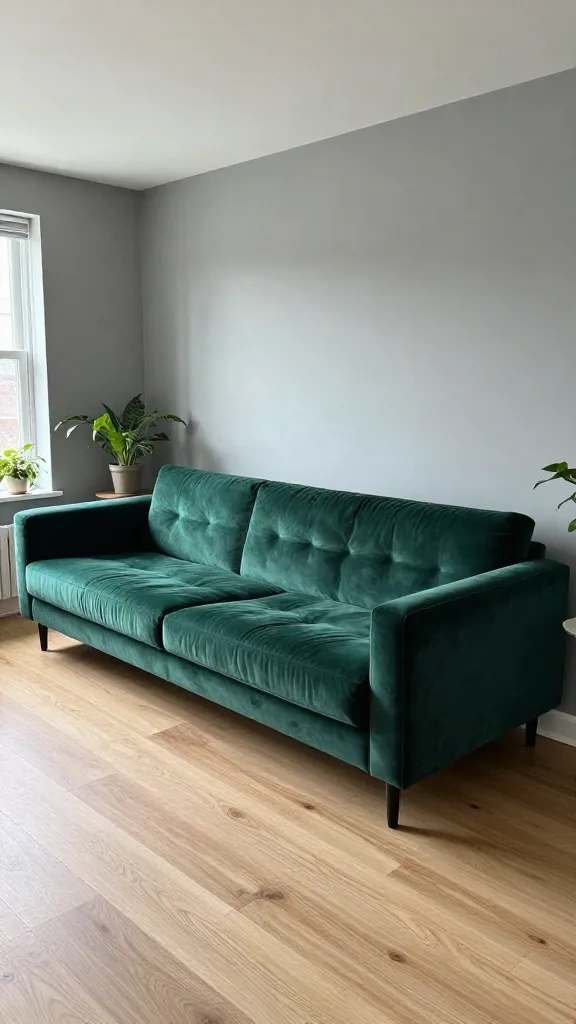
A neutral grey room often feels unfinished or cold without a heavy anchor to ground the space. Adding a Deep Emerald Velvet Sofa provides that necessary weight and instantly makes the room feel expensive and intentional.
The fabric reflects light in a way that flat cotton just can’t match, giving you different shades of forest green depending on the time of day. It acts as a bridge between dark charcoal walls and lighter dove grey accents, pulling the whole palette together.
Stick with a clean lined mid century silhouette to keep the look modern rather than stuffy. You can toss on a few light grey wool throws to soften the jewel tone and make the seating area feel more approachable for daily lounging.
This piece works best when you let it be the boss of the room. Keep your rug simple and your wooden furniture in medium oak tones so the rich green velvet remains the clear focal point of your living space.
2. Muted Sage Walls
| Feature | Muted Sage | Standard Grey |
|---|---|---|
| Undertone | Earth-toned yellow and green | Cool blue or flat charcoal |
| Vibe | Organic and soft | Industrial and sharp |
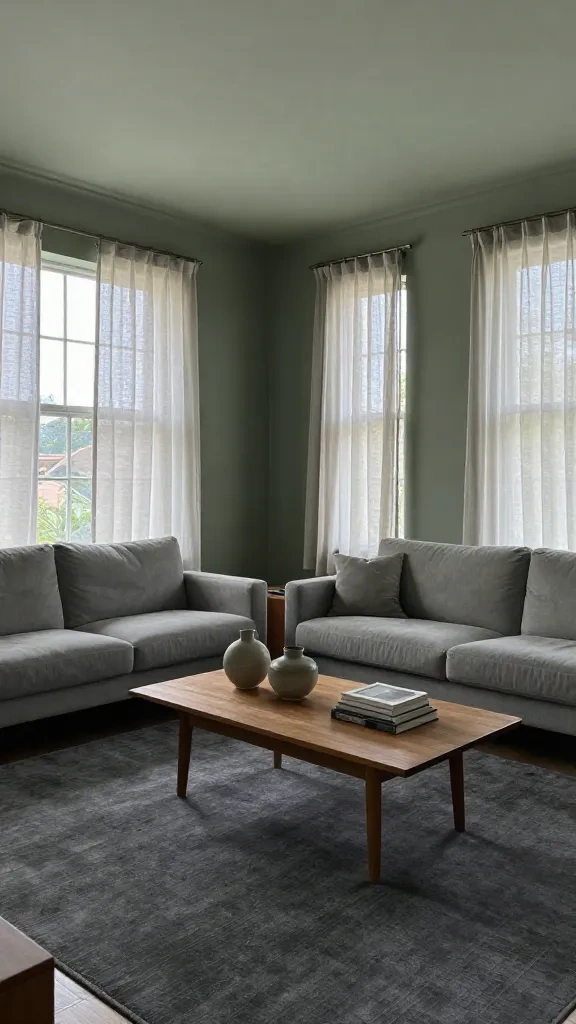
Imagine walking into a room at dusk when the light hits a dusty, herb-colored wall. It feels much softer than a sterile white or a flat grey because it pulls in natural warmth without being loud.
I usually suggest this specific shade for rooms that have plenty of charcoal furniture. The muted green acts as a bridge between the dark fabric and the rest of the space, making the grey look intentional rather than cold.
Stick to matte finishes to keep the color looking sophisticated and lived-in. When you pair these walls with a slate rug or wool pillows, the room feels grounded and quiet. It is a great way to use color if you are usually afraid of anything too bright.
3. Charcoal Grey Feature Wall
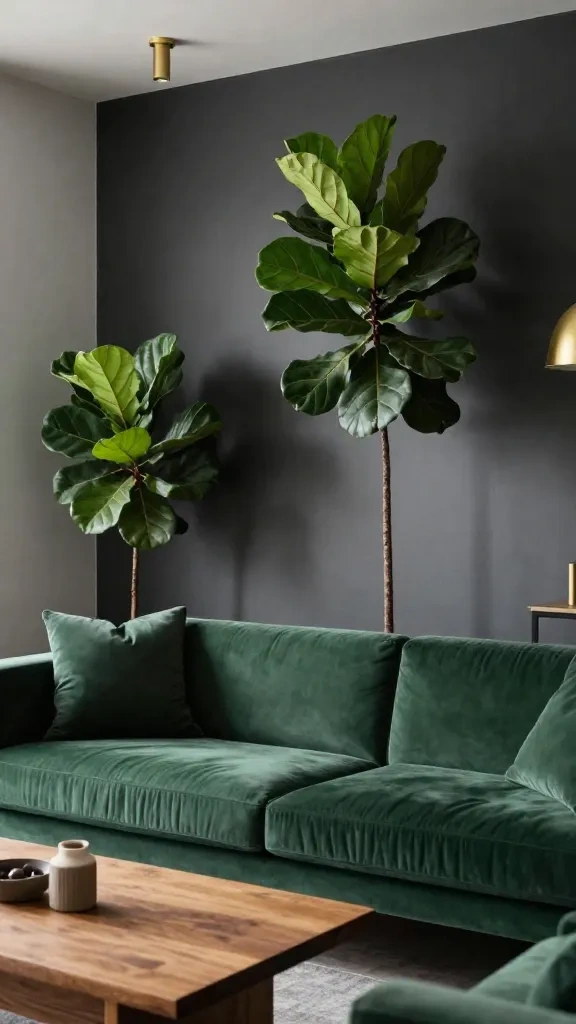
A charcoal grey feature wall acts as a visual anchor that makes every green accent in the room pop with intensity. It provides a moody, sophisticated backdrop that stops a space from feeling too airy or washed out.
You should pair this deep shade with a velvet emerald sofa or several tall potted plants like a Fiddle Leaf Fig. The dark background absorbs light in a way that highlights the organic textures of the leaves and fabric.
To keep the room from feeling like a cave, use matte paint instead of a glossy finish to avoid weird reflections. This setup works best when you pull in some warm wood tones through a coffee table or shelving to balance the cool tones.
The contrast between the slate tones and forest greens creates a cozy, high end atmosphere without needing expensive decor. It is a simple way to add depth to a standard rectangular living room layout.
4. Olive Green Throw Pillows
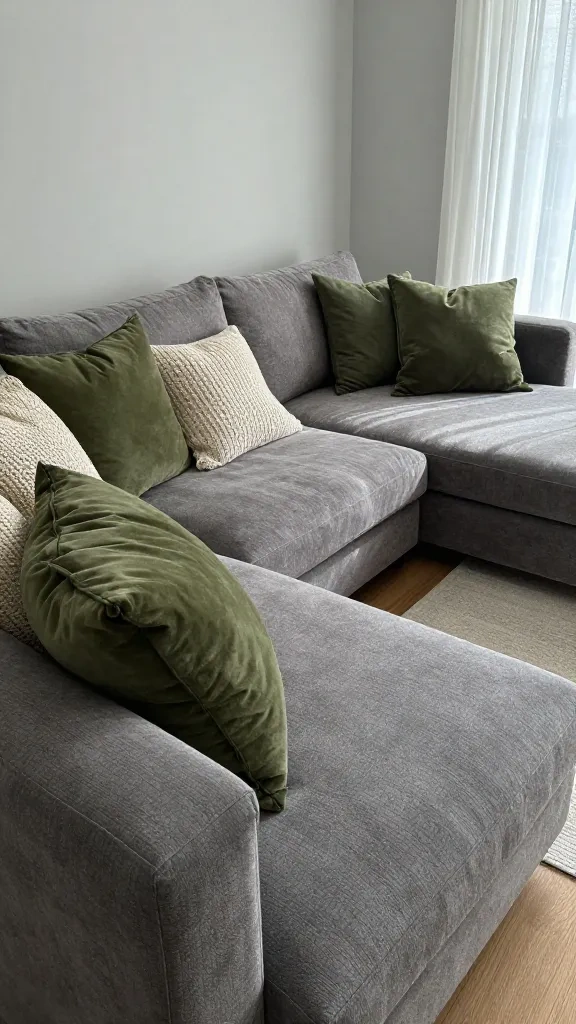
Toss a few olive green pillows onto a charcoal or light grey sofa to instantly ground the room. The muted, earthy tone of olive acts like a neutral, so it doesn’t clash with the cool undertones of your grey furniture.
I usually recommend mixing textures like chunky wool or soft velvet rather than sticking to flat cotton. This adds depth to the seating area and makes the space feel lived in rather than like a showroom.
- Pair solid olive covers with a subtle cream pattern to break up the color block.
- Choose feather inserts instead of poly-fill for that high end “karate chop” look.
- Stick to odd numbers, like three or five pillows, for a more relaxed and natural arrangement.
You can swap these out seasonally, but they really shine in the winter when you want your grey living room to feel a bit more cozy and private.
5. Light Grey Geometric Rug
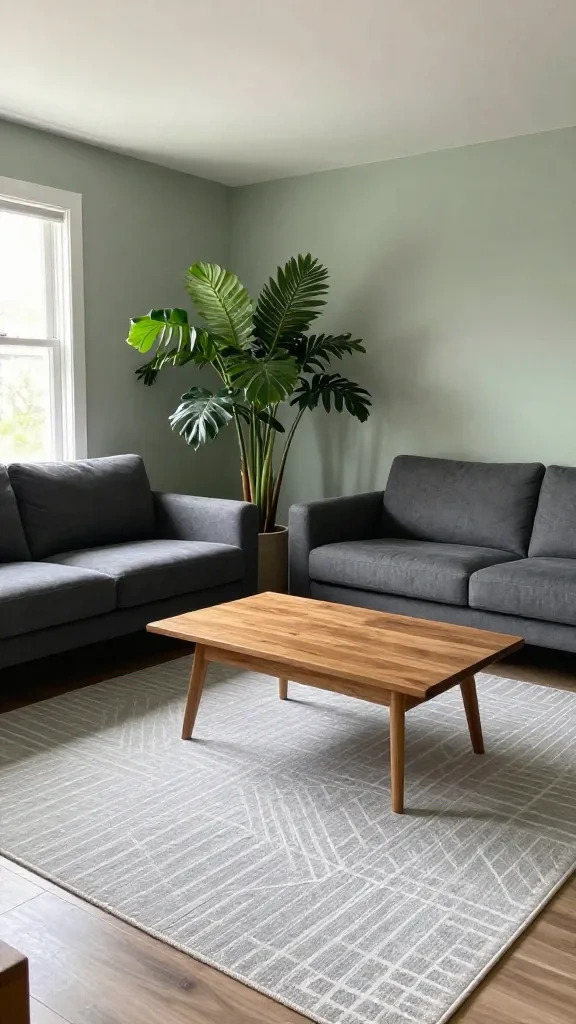
A rug is usually the easiest way to bridge the gap when you’re mixing two distinct colors like sage and charcoal. I always tell people to look for a light grey geometric rug with thin white lines to keep the floor from feeling heavy. It acts as a neutral anchor that lets your green velvet sofa or indoor plants really pop.
The beauty of a geometric pattern is that it adds structure without being distracting. You want something with a low pile, especially if you have kids or pets running around. It stays looking sharp and doesn’t trap every single crumb like a shaggy rug would.
Try to find a piece that features a subtle diamond or trellis print. This specific pattern creates a sense of movement across the room. It makes a smaller living area feel wider because the lines draw your eyes toward the walls.
If your walls are a darker forest green, the light grey tones will provide some much needed contrast. It keeps the space from feeling like a cave. Plus, it’s a very forgiving color for high traffic areas compared to a pure white rug.
6. Floor-to-Ceiling Sheer Curtains
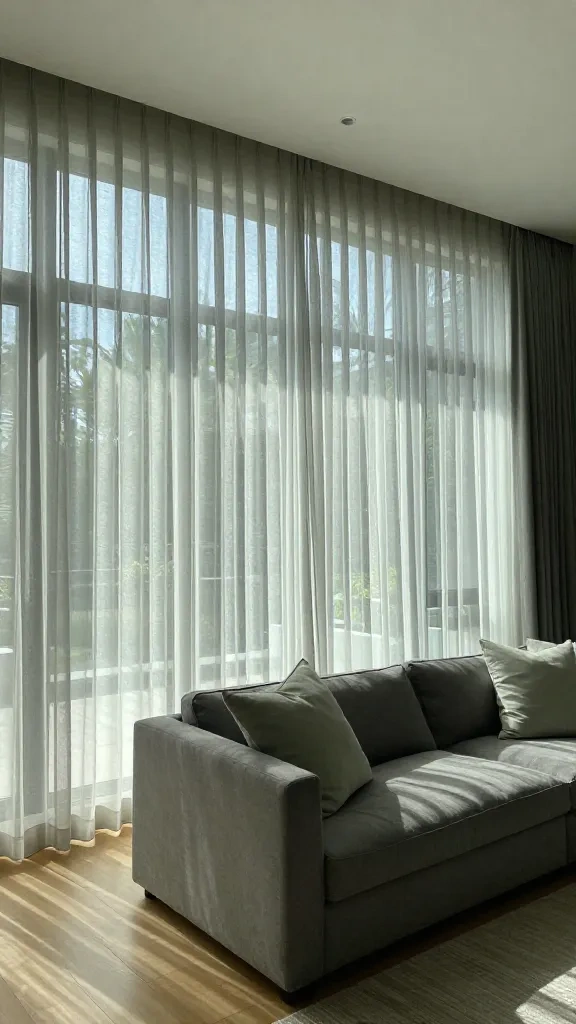
Installing sheer curtains that run from the very top of your wall to the floor creates a soft, diffused light that makes grey walls feel less cold. These panels act like a filter for your living room, blurring the lines between your indoor furniture and the greenery outside your windows.
The real magic happens when you choose a fabric with a slight sage or moss tint. This subtle hint of green prevents the curtains from looking like standard office blinds while adding a layer of texture that keeps the room feeling cozy rather than sterile.
- Visual Height: Mounting the rod near the ceiling draws the eye upward and makes your standard living room feel much taller than it actually is.
- Light Control: The thin fabric stops harsh glares on your TV screen without making the room feel dark or cave like during the day.
- Color Blending: Grey walls can sometimes feel flat, but the soft folds of green fabric add depth through natural shadows and highlights.
- Privacy Balance: You get to keep your view of the garden while preventing neighbors from seeing every detail of your couch setup.
Try to find a linen blend for these curtains. The natural weave has small imperfections that catch the light beautifully and give the space a more relaxed, lived in vibe.
7. Concrete Grey Coffee Table
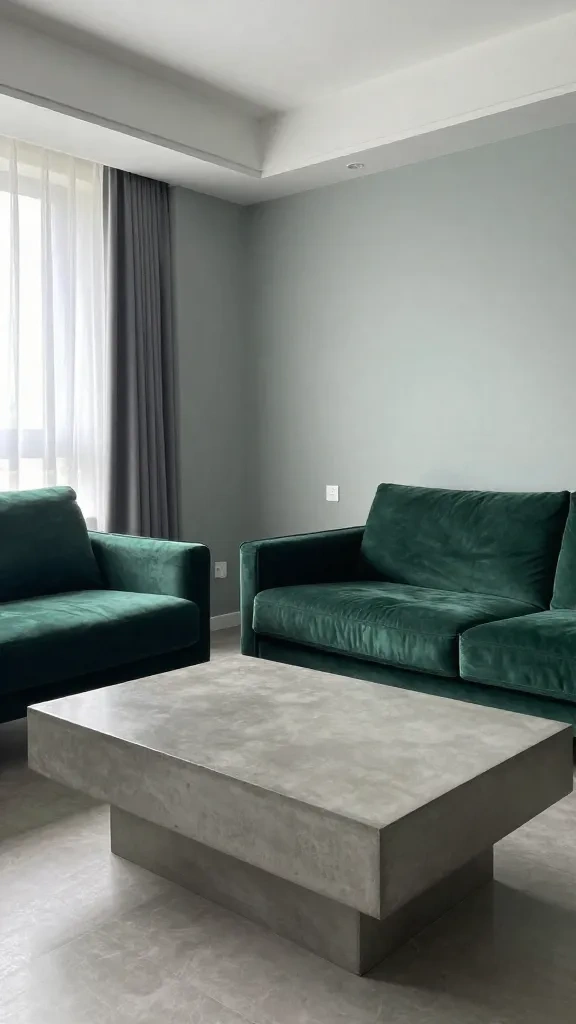
You can go one of two ways when picking a center piece for your seating area. A polished cement table offers a sleek, industrial look that feels very modern and clean. On the other hand, a raw, porous concrete finish adds a gritty texture that grounds the room and hides coffee rings much better.
The polished version reflects light and keeps a small room from feeling too heavy or weighed down. However, the matte, unfinished look provides a beautiful contrast against soft velvet green sofas or plush grey rugs. It creates a tactile experience that makes the space feel more curated and less like a showroom.
I suggest choosing a low profile circular table with a slightly weathered finish. The round edges soften the hard material, making it safer for your shins and easier to walk around. It acts as a neutral anchor that lets your green accents really pop without competing for attention.
8. Pops of Neon Green Artwork
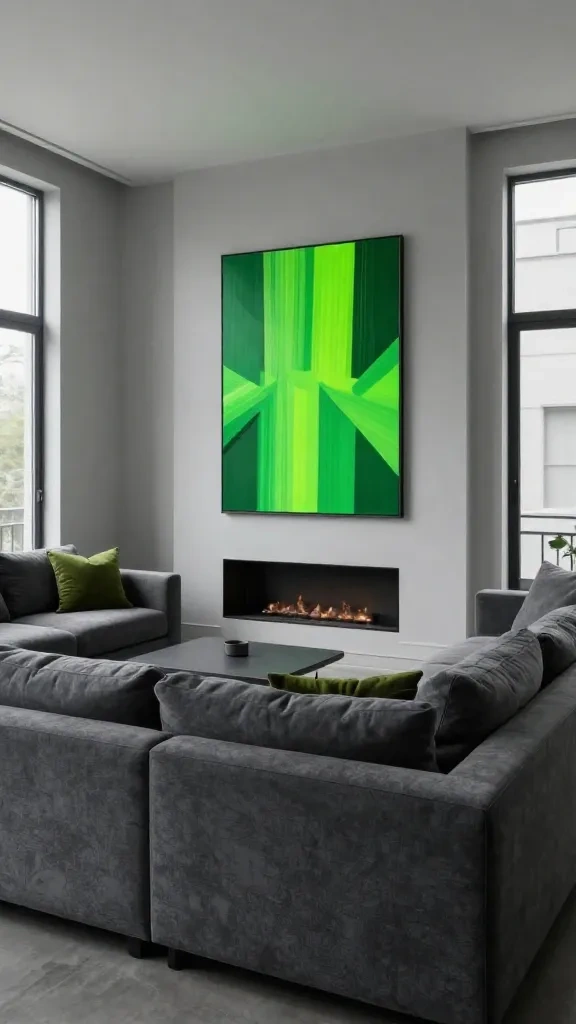
A muted grey room can sometimes feel a bit flat or sleepy if there isn’t a sharp point of interest. Adding a piece of neon green artwork creates a visual anchor that keeps the space from looking like a catalog page. It breaks up the monotony and gives the eye a specific place to land.
You don’t need a massive mural to make this work. A single framed print with electric lime streaks or a minimalist abstract piece against a charcoal wall does the trick. The high contrast makes the grey look intentional and sophisticated rather than just safe.
Try placing the art above a light grey sofa or on a narrow gallery wall. It works best when the rest of the room stays neutral, so the fluorescent tones can really pop. This small addition makes the whole setup feel energetic and modern without requiring a full renovation.
9. Large Fiddle Leaf Fig Tree
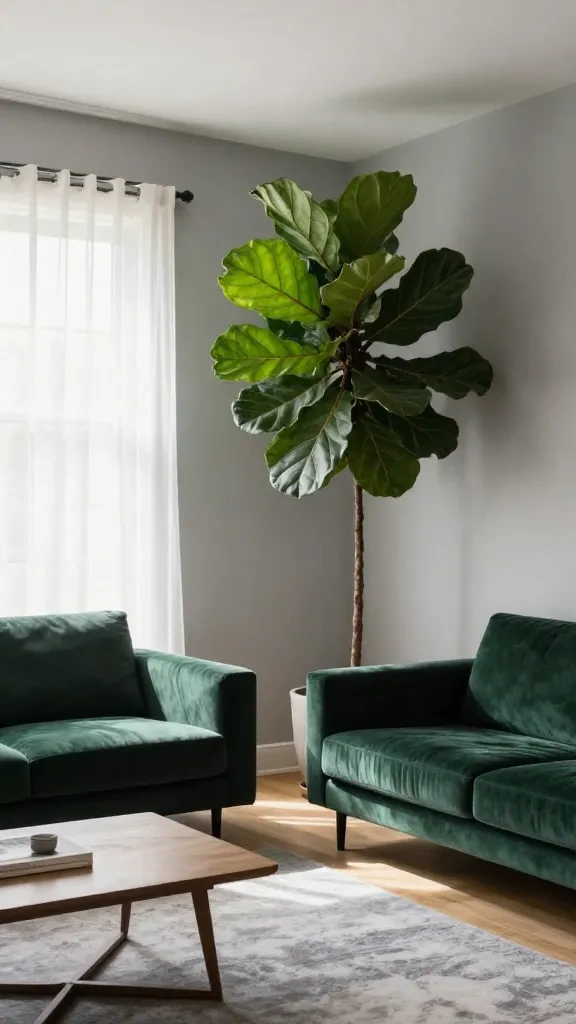
| Feature | Real Fiddle Leaf | High Quality Faux |
|---|---|---|
| Light Needs | Bright, indirect sun | Any dark corner |
| Maintenance | Tricky watering schedule | Occasional dusting |
| Visual Vibe | Natural leaf variations | Perfectly consistent |
I once saw a massive six foot tall Fiddle Leaf Fig tucked into a charcoal grey corner, and it completely changed how the room felt. The deep green, violin shaped leaves pop against dark moody walls in a way that smaller plants just can’t manage.
If your living room has a lot of flat grey surfaces, you need that organic texture to keep the space from feeling like a cold office. These trees act like living sculptures that fill vertical gaps without cluttering the floor.
Don’t worry if you don’t have a green thumb. A high end silk version works just as well to bring in that natural contrast against your grey furniture, and you won’t have to stress about brown spots or dropping leaves.
10. Moss Green Accent Chair
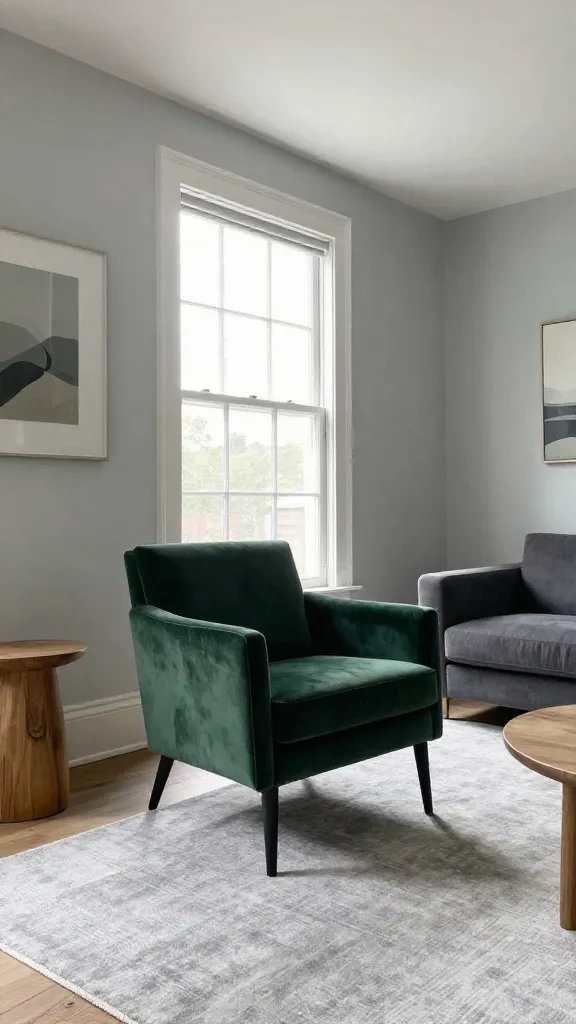
A single moss green velvet armchair acts as the perfect anchor for an otherwise cold, industrial grey space. The deep, earthy tone pulls the room together without feeling like you’re trying too hard to match every accessory. It works best when placed near a window where natural light can catch the texture of the fabric.
You should look for a chair with matte black legs or a dark walnut frame to keep the vibe grounded. This specific shade of green feels sophisticated rather than bright or neon, making it a safe bet for long term style. It provides a comfortable spot to read while adding a necessary pop of color to your charcoal sofa setup.
Pairing this chair with a chunky grey knit throw creates a cozy corner that feels intentional. It’s a simple way to break up the monotony of grey walls without committing to a full room repaint. The contrast between the organic green and the neutral grey creates a balanced, lived in look that guests will actually want to sit in.
11. Warm Wood and Grey Tones
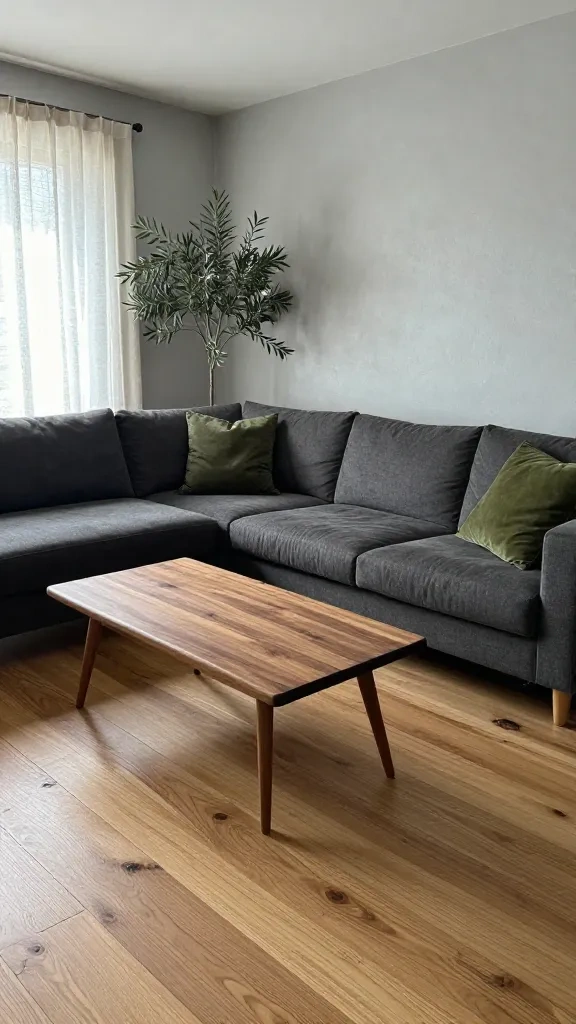
Try mixing a charcoal sofa with a raw oak coffee table to keep your space from feeling too sterile. The natural grain of the wood cuts through the coolness of grey walls, making the room feel lived-in rather than like a showroom.
You can lean into this by using mid-century modern furniture with tapered walnut legs. These warmer stains act as a bridge between forest green accents and slate floor tiles, creating a balanced, earthy vibe.
- Swap out metal hardware for honey-toned wood knobs on media consoles.
- Layer a jute rug under a grey seating area to add organic texture.
- Use floating shelves made of reclaimed timber to display green ceramic vases.
This combination works because the yellow undertones in the wood naturally highlight the richness of any green decor you add to the mix.
12. Silver-Grey Metal Lighting
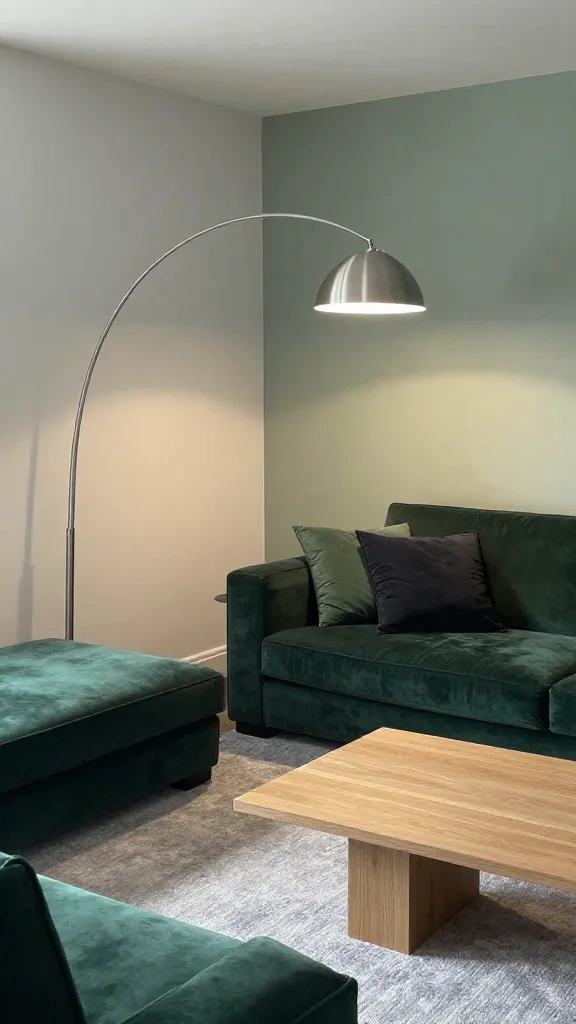
Have you noticed how green paint can sometimes make a room feel a bit heavy or dark? To fix that, I always recommend adding some brushed nickel or polished chrome floor lamps to the mix.
The cool, metallic surface acts like a mirror for your light bulbs. It bounces brightness around the corners of the room without clashing with your olive or forest green walls.
I recently saw a tall arc lamp in a matte silver finish placed right next to a deep emerald velvet sofa. The contrast was incredible because the metal looked crisp and clean against the soft, organic texture of the fabric.
If you have grey furniture, silver fixtures tie everything together so the space feels intentional rather than cluttered. It keeps the palette feeling modern and fresh instead of leaning too hard into a rustic or muddy look.
Try picking out a task lamp with a satin finish for your side table. It adds a subtle shimmer that catches the eye during the day and provides a sharp, clear glow once the sun goes down.
13. Patterned Wallpaper Behind Shelves
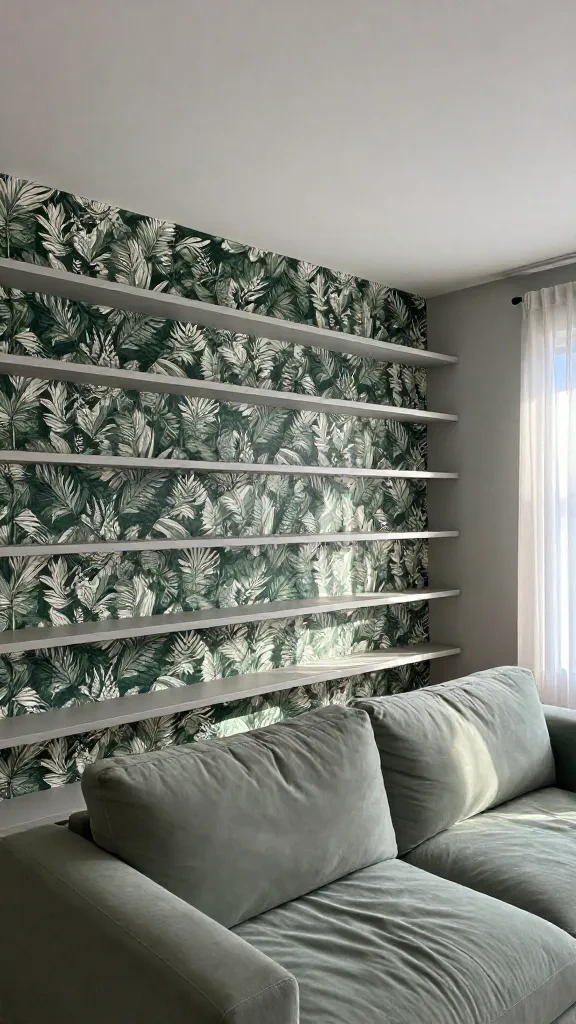
Adding a splash of personality to a grey and green room doesn’t require painting the entire space. You can tuck a botanical print or a geometric pattern behind open shelving to create a layered look that feels intentional and expensive.
This trick works best when you use a deeper forest green pattern to contrast against light grey shelves. It turns a standard bookcase into a focal point without overwhelming your furniture or your budget.
- Stick to a peel and stick option so you can swap out the design if you decide to change your accent colors later.
- Choose a small scale pattern like tiny sage leaves to ensure the design isn’t cut off by your books and decor.
- Match the background color of the paper to your wall paint to make the shelves look like they are built into the room.
Try mixing textures by placing matte ceramic vases against a metallic or glossy wallpaper finish. The way the light hits the back of the shelf adds a subtle glow that makes the whole corner feel much brighter.
14. Forest Green Bookshelves
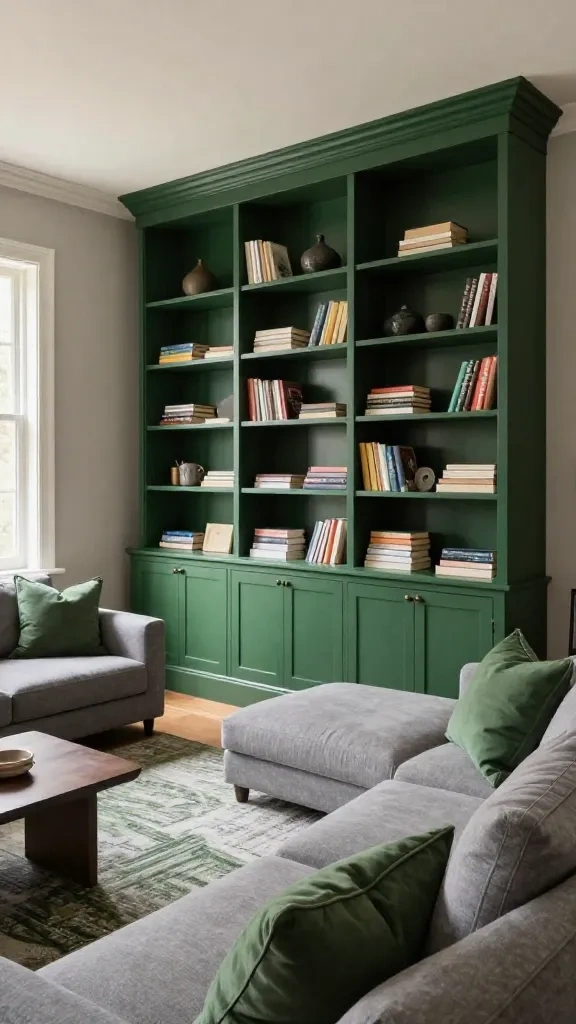
You can paint your existing built-ins with a deep Forest Green matte finish to create a heavy, dramatic focal point. This approach makes the shelving unit feel like a permanent part of the architecture, especially when paired with light grey walls. It creates a moodier vibe that works well if you want a cozy library feel in your main seating area.
The alternative is to use open shelving with thin green metal frames against a charcoal grey backdrop. This looks much more modern and prevents the room from feeling too dark or cramped. It’s a better move if your living room doesn’t get a ton of natural light throughout the day.
I personally recommend going with the full-wall saturated green paint on solid wood shelves. It hides the clutter of book spines much better than open shelving does. Just make sure to use brass hardware for the cabinet pulls to break up the dark color and add a bit of warmth.
15. Mix Textures for Depth
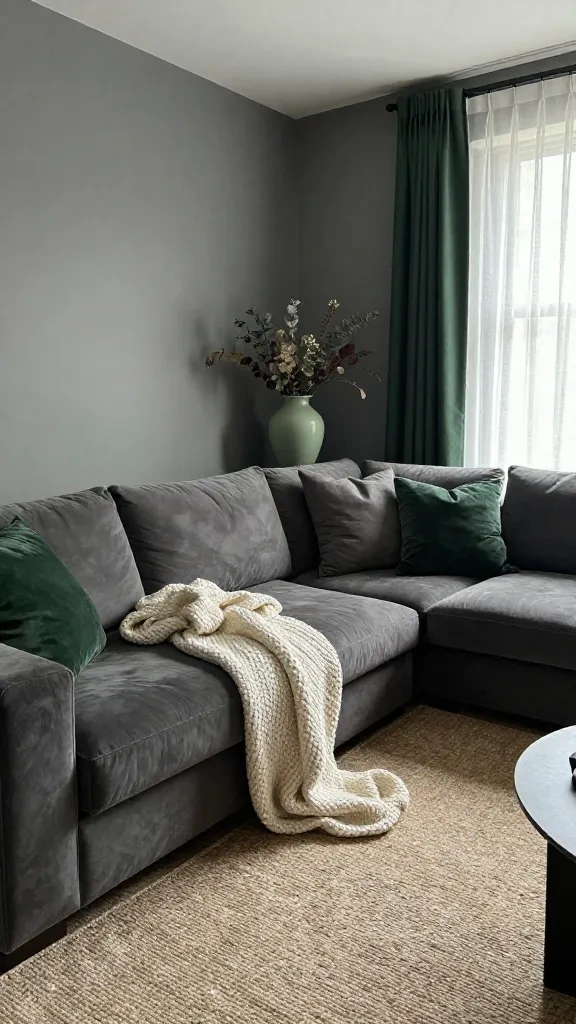
A flat, monochrome space feels cold and uninviting, especially when you are working with muted tones like charcoal or sage. You need to play with how light hits different surfaces to make the room feel lived in and cozy. Without variety, your green accents will just blend into the grey background rather than standing out.
Try tossing a chunky wool throw over a smooth leather sofa to create an immediate contrast. You can also layer a high pile rug over hardwood floors to ground the seating area. These small changes stop the eye from sliding across the room and give your brain something interesting to focus on.
Natural elements work best for adding this tactile interest. A woven jute basket or a velvet pillow in deep forest green adds a sense of luxury that paint alone cannot provide. Mixing these rough and soft finishes makes your living room feel intentional and much more comfortable for daily use.
Wrapping Up
Choosing the right mix of grey and green living room ideas helps you create a space that feels both calm and modern. These designs show that you do not need a massive budget to make your home look polished and inviting. Pick your favorite style from this list and start painting or swapping out pillows today to see how much a simple color change can improve your mood.